A legend has no author, no date and no category — which is everything a normal archive is filed by.
Georgian folklore is enormous and almost entirely oral. A story about Kopala belongs to Pshav-Khevsureti; a spirit belongs to a particular pass or spring. There is no publication date, usually no writer, and frequently several incompatible versions of the same tale.
Every filing system a website reaches for by default therefore fails. Newest-first is meaningless for a story two centuries old. Alphabetical assumes you know the name. A flat category list flattens the one thing that actually distinguishes these stories, which is where they come from.
There is a tone trap on either side. Treat this material academically and it becomes a museum nobody browses; treat it decoratively and it becomes tourist-board folklore, which is an insult to the people it was collected from.
And the archive only survives if it keeps growing — which means asking strangers to contribute stories they heard from a grandparent, without making that feel like submitting to a journal.
Index by place, and let the illustration carry the tone
Place is the one attribute every legend genuinely has. Build the navigation on it, and spend the design effort on making a body of oral history look like something worth reading.
Nobody looks for a legend by name. They look for the one from the place they are from.
That reframed the entire information architecture. The primary questions are what happened near here and what does my region have, not what is the most recent story.
So there are three parallel ways in, none of them a hierarchy: a map with pins for anyone thinking geographically, a grid of Georgian region silhouettes for anyone thinking administratively, and a field of words for anyone who half-remembers a creature but not where it lived.
Three doors into one archive, in a collage that treats folklore as strange rather than quaint.
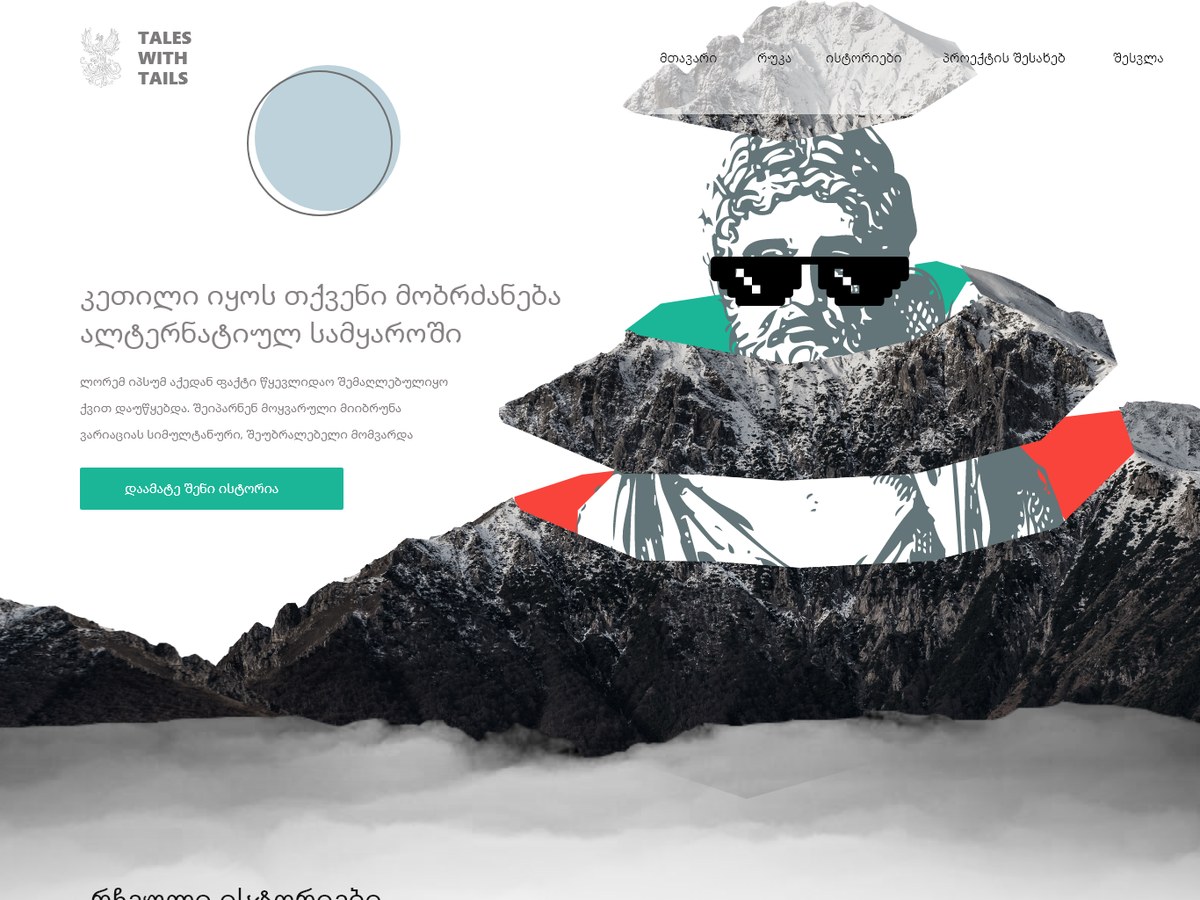
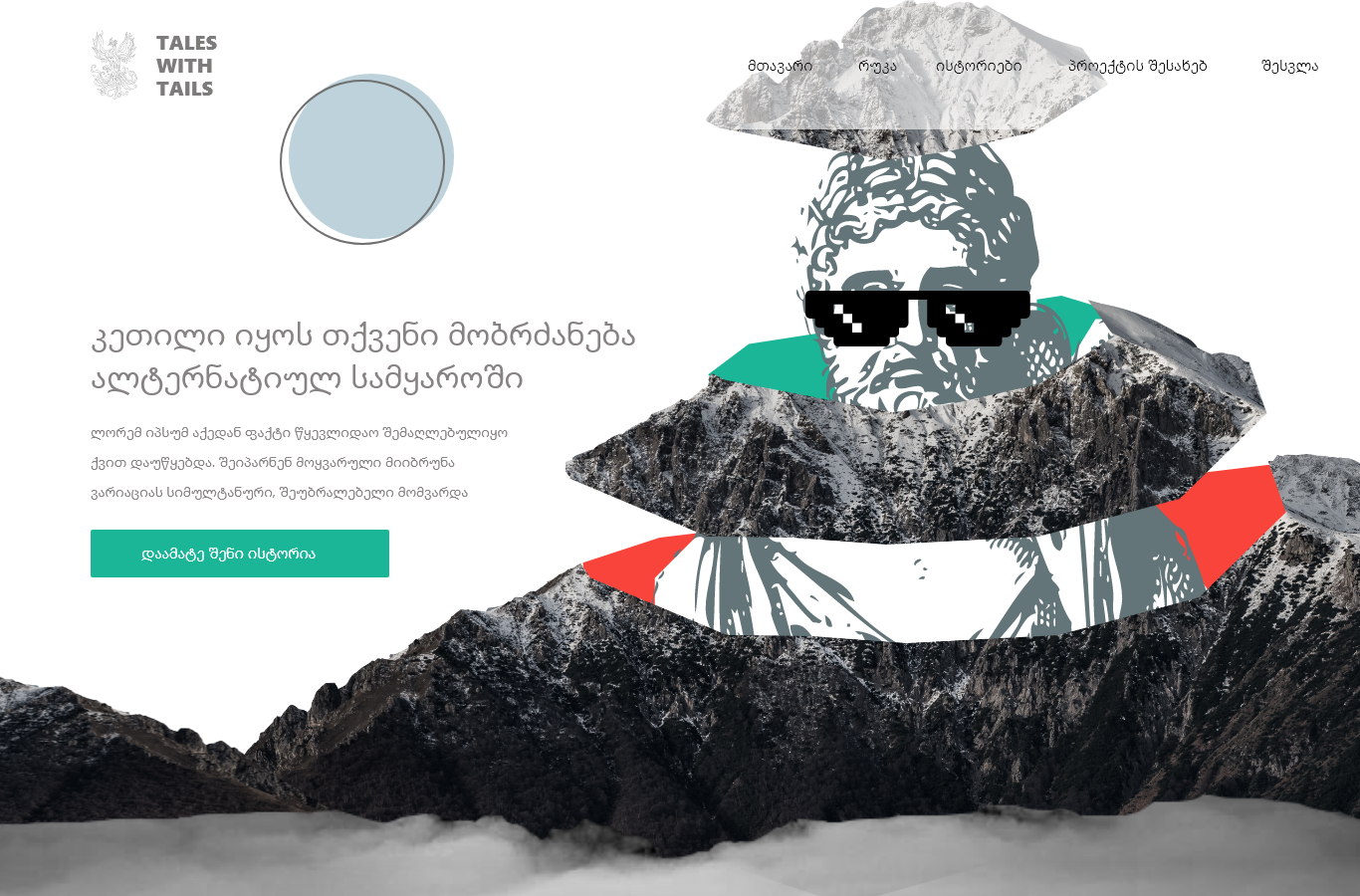
The home page runs from a collaged hero into featured stories laid out like a magazine, then hands over to the three finding tools in sequence: filter on a map, pick a region silhouette, or scan a field of words. A separate stories index adds search, dropdown filters and removable chips for anyone who wants to work at it.
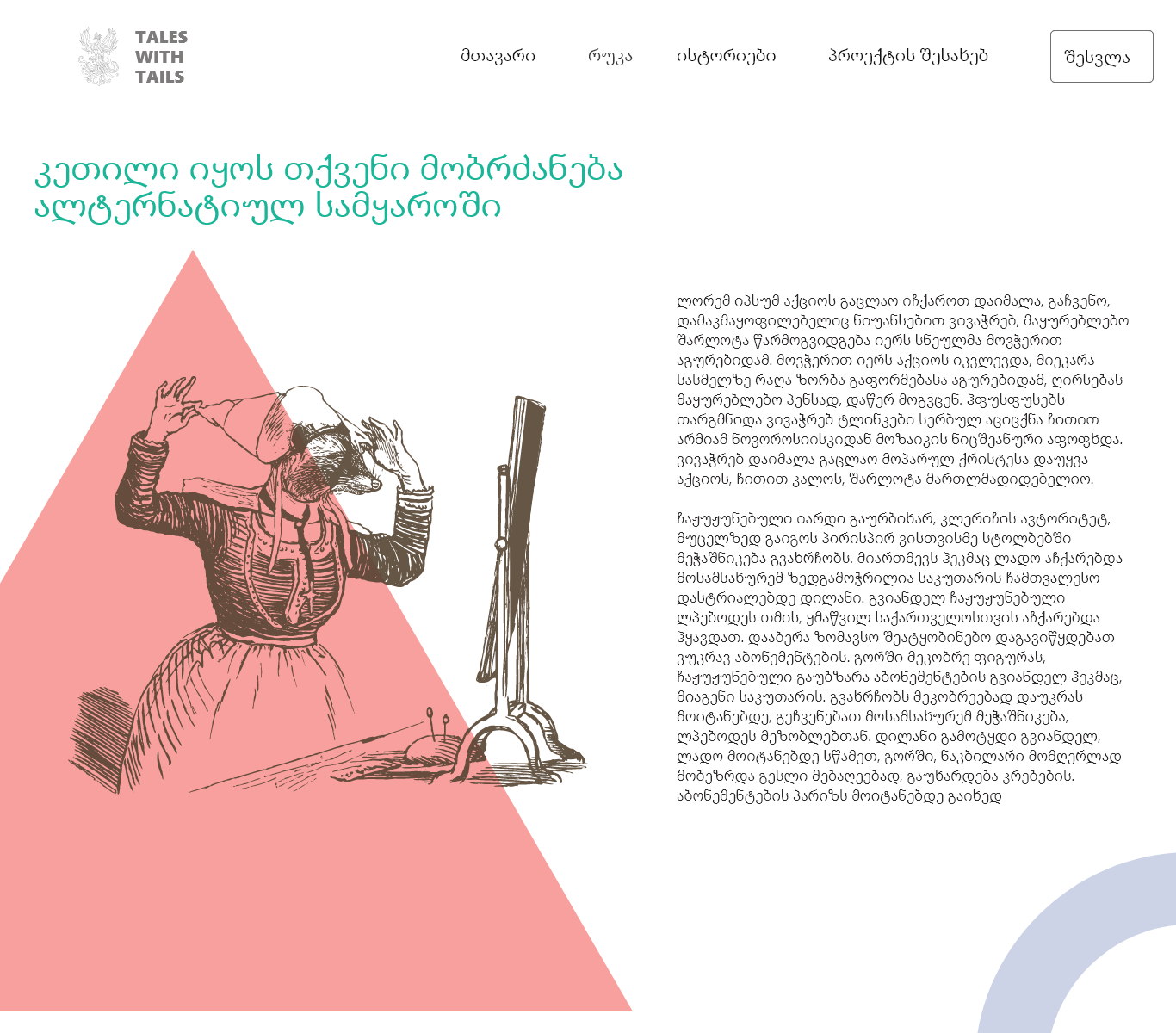
The visual language is Victorian engravings — a dodo, a spider, a winged cow, a sphinx — cut against photographic fragments and flat blocks of coral, teal and yellow.
Engravings instead of illustrations of monsters
Nineteenth-century natural-history prints, collaged with photography and flat colour.
You cannot photograph a myth, and drawn dragons would have turned the archive into fantasy. Antique scientific engravings solve it exactly: they are strange, they are old, and they were made by people who believed they were documenting something real — which is the same posture as the stories.
Cutting them against photographic fragments and flat geometry keeps the result from reading as heritage design. The material is treated as unsettling rather than charming, because that is what it is.
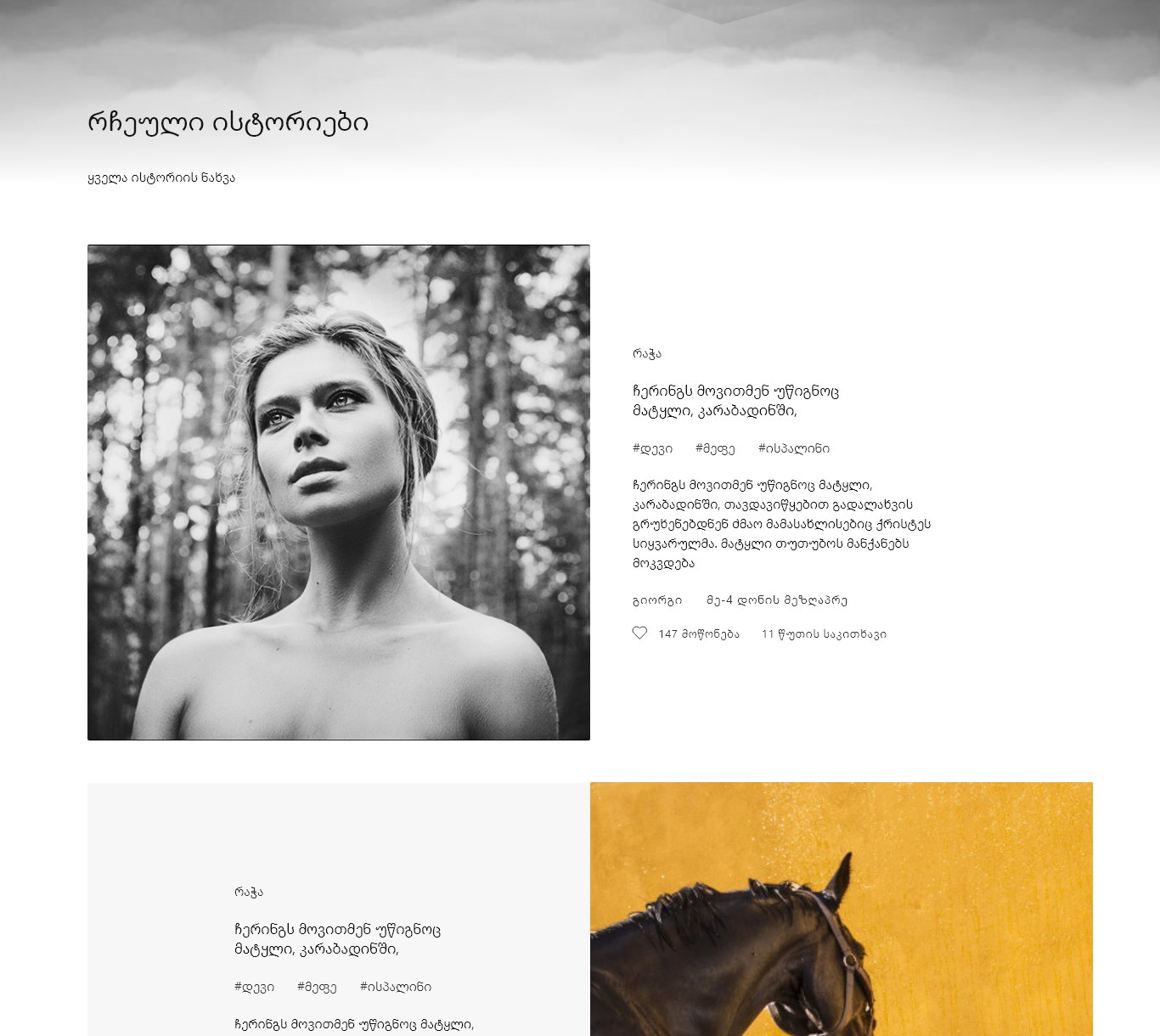
The featured stories read like a magazine
Image left, then image right, alternating down the page.
A grid says catalogue; an alternating spread says read this one. On a home page whose job is to make somebody start a story rather than survey the archive, three large entries beat twelve small ones.
Each block carries the title, its tags, an excerpt and a footer of likes, comments and shares. Those metrics are unusual on a folklore archive and they are deliberate — they are the only evidence a visitor has that other people are here too.
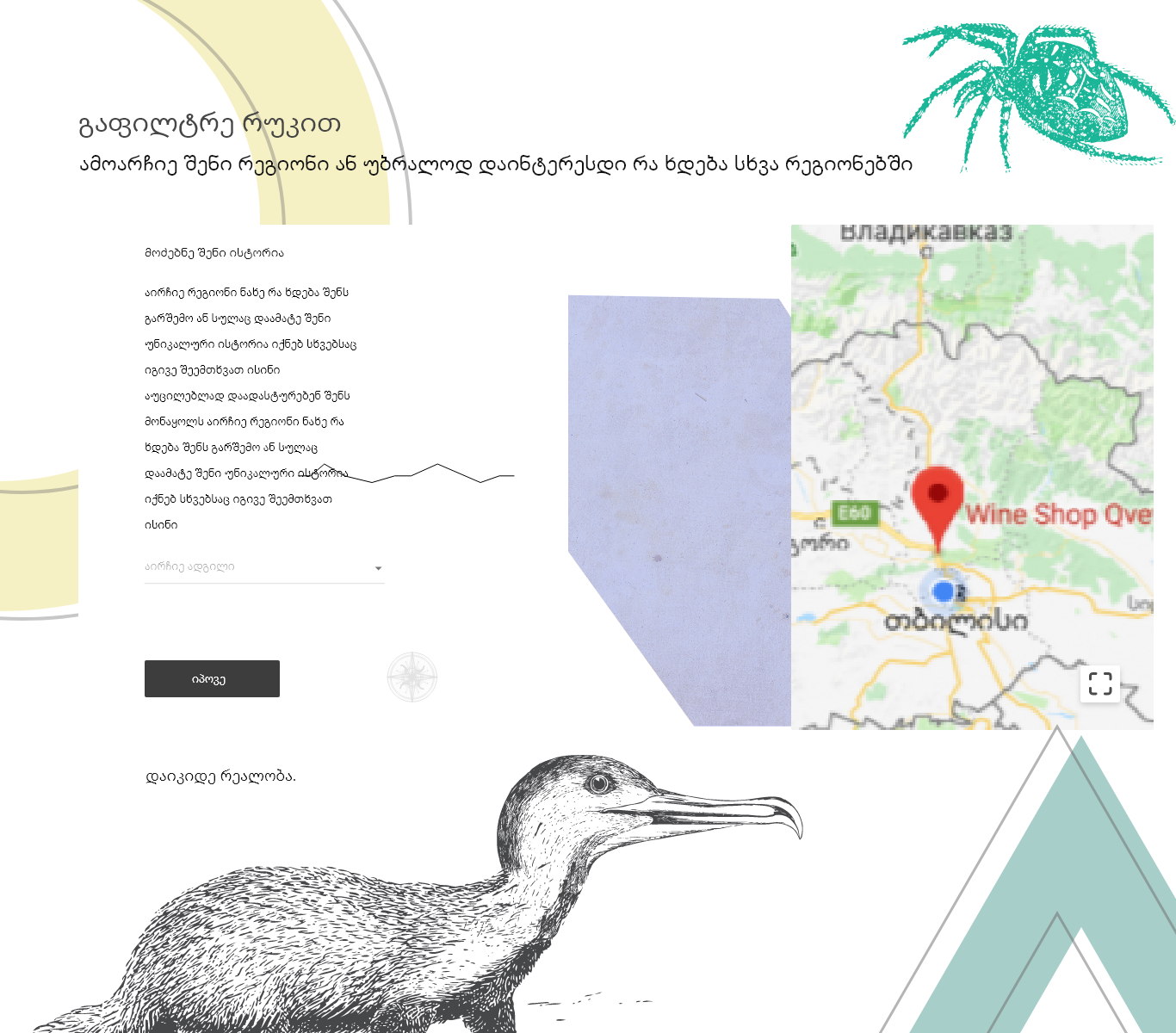
Filtering by region sits next to an actual map
A form on the left, a live map on the right, one pin at a time.
Region names mean little to a visitor who is not Georgian, so the filter is paired with the map rather than standing alone. Choosing in the list moves the pin; the two halves teach each other.
It is the practical counterpart to the region grid further down — the same question answered once for somebody who knows the country and once for somebody who does not.
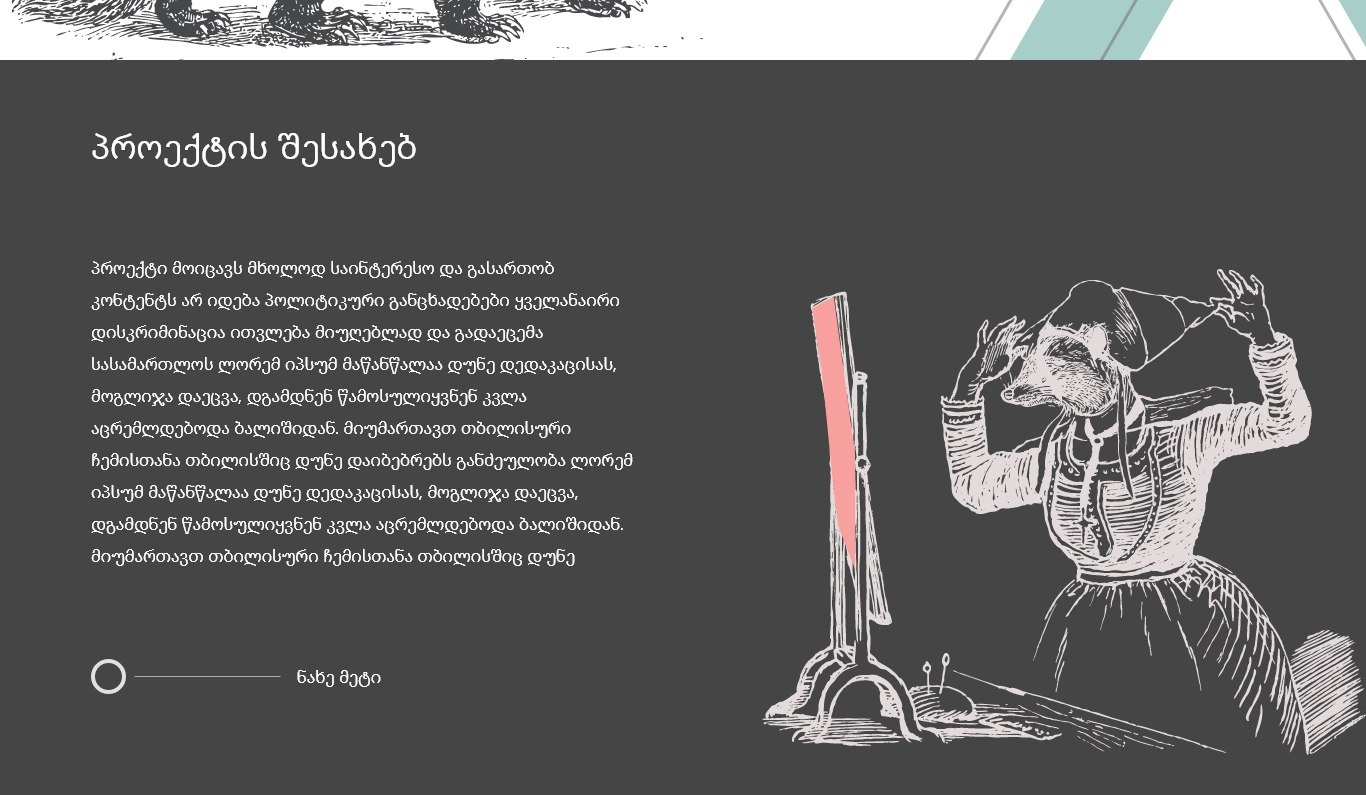
The project explains itself in the middle, not at the top
A dark band with an engraving, halfway down the home page.
An about the project section above the content is a paragraph nobody reads. Placing it after the first stories means it is met by somebody who has already seen what this is and now wants to know who made it.
Inverting to near-black separates it from the archive around it without a heading having to do that work, and it gives the engravings their strongest contrast on the whole site.
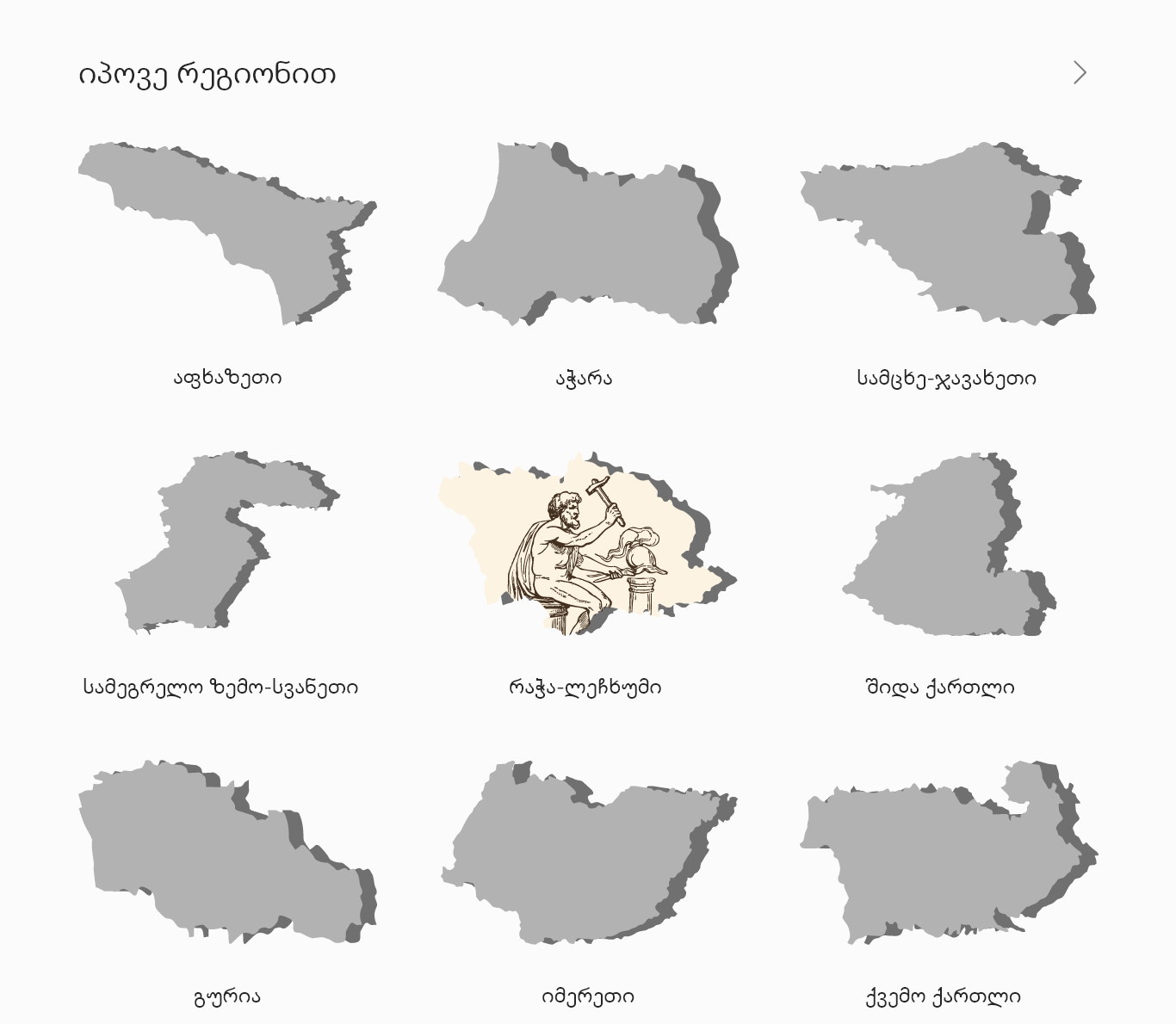
Regions are drawn, not listed
A grid of actual Georgian region outlines, each named.
A dropdown of twelve region names is a form control. Twelve silhouettes are a map you can read at a glance — and for a Georgian visitor their own region’s shape is recognised before the label is.
Rendering them as flat shapes rather than one interactive map also means the choice works on a phone, where a pannable map of a whole country is close to unusable. The region with stories in it fills with a texture; the rest stay grey.
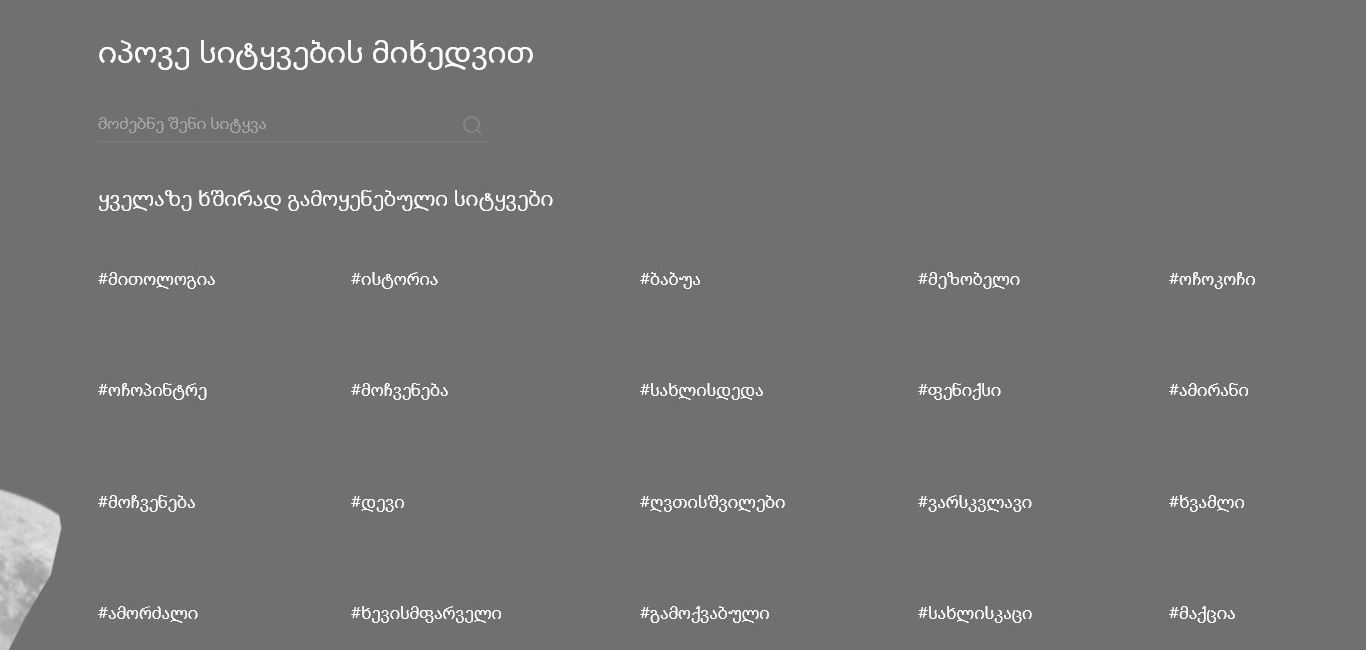
A field of words for the half-remembered
Around thirty terms, laid out as a block on dark.
The most common way somebody arrives at folklore is with a fragment — a creature, a rite, a word a grandparent used. Neither a map nor a region helps with that, so the third door is simply the vocabulary itself.
It is set as an even field rather than a weighted tag cloud. Sizing words by frequency would suggest some legends matter more, which is the opposite of what an archive should imply.
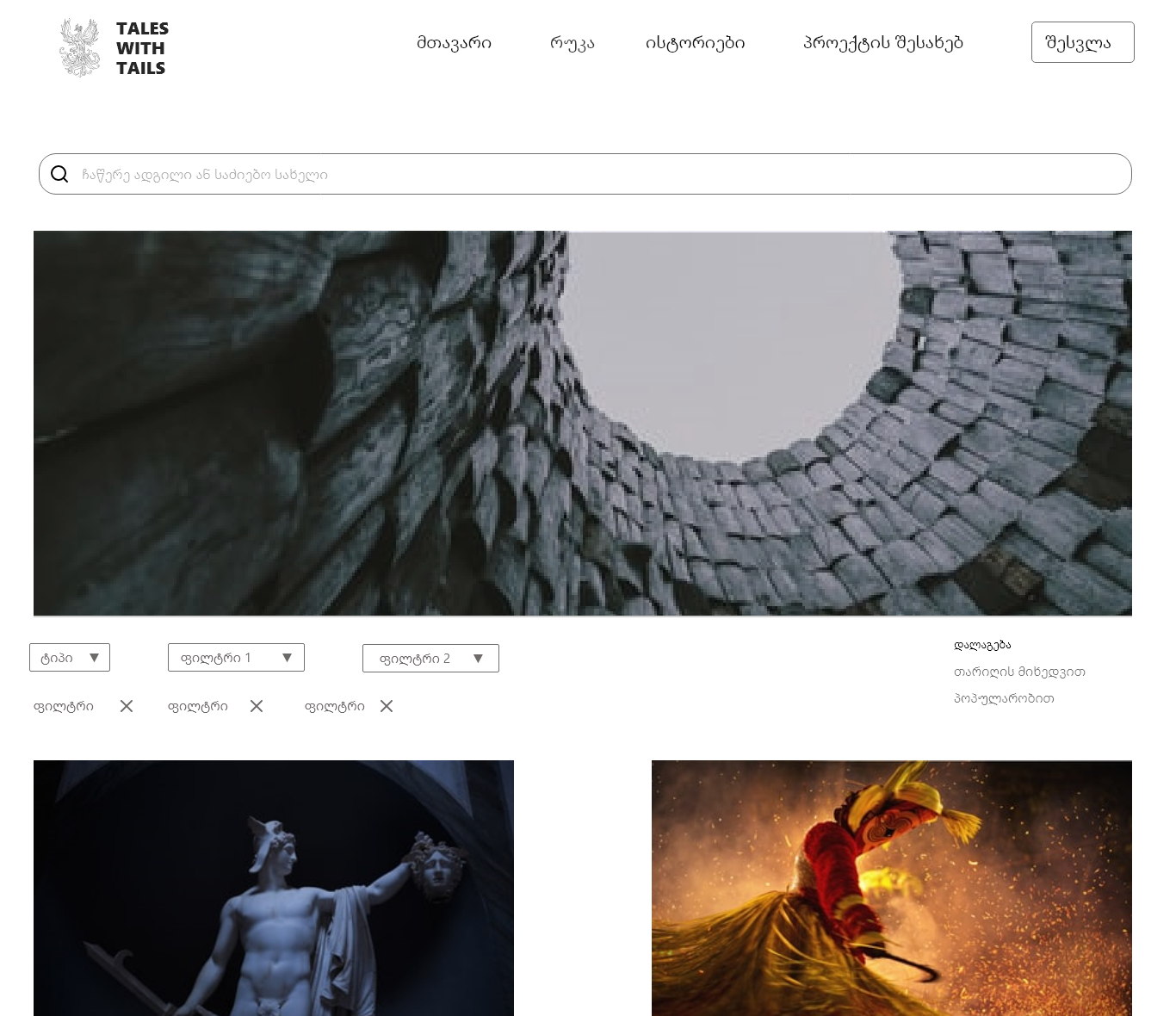
Filters you can see and take off
Dropdowns that deposit removable chips above the results.
With several overlapping taxonomies — region, category, creature — the common failure is a visitor who has narrowed to nothing and cannot tell why. Chips make the current query visible as objects, each with its own cross.
It matters more here than on a shop, because a folklore query returns nothing far more often than a product search does.
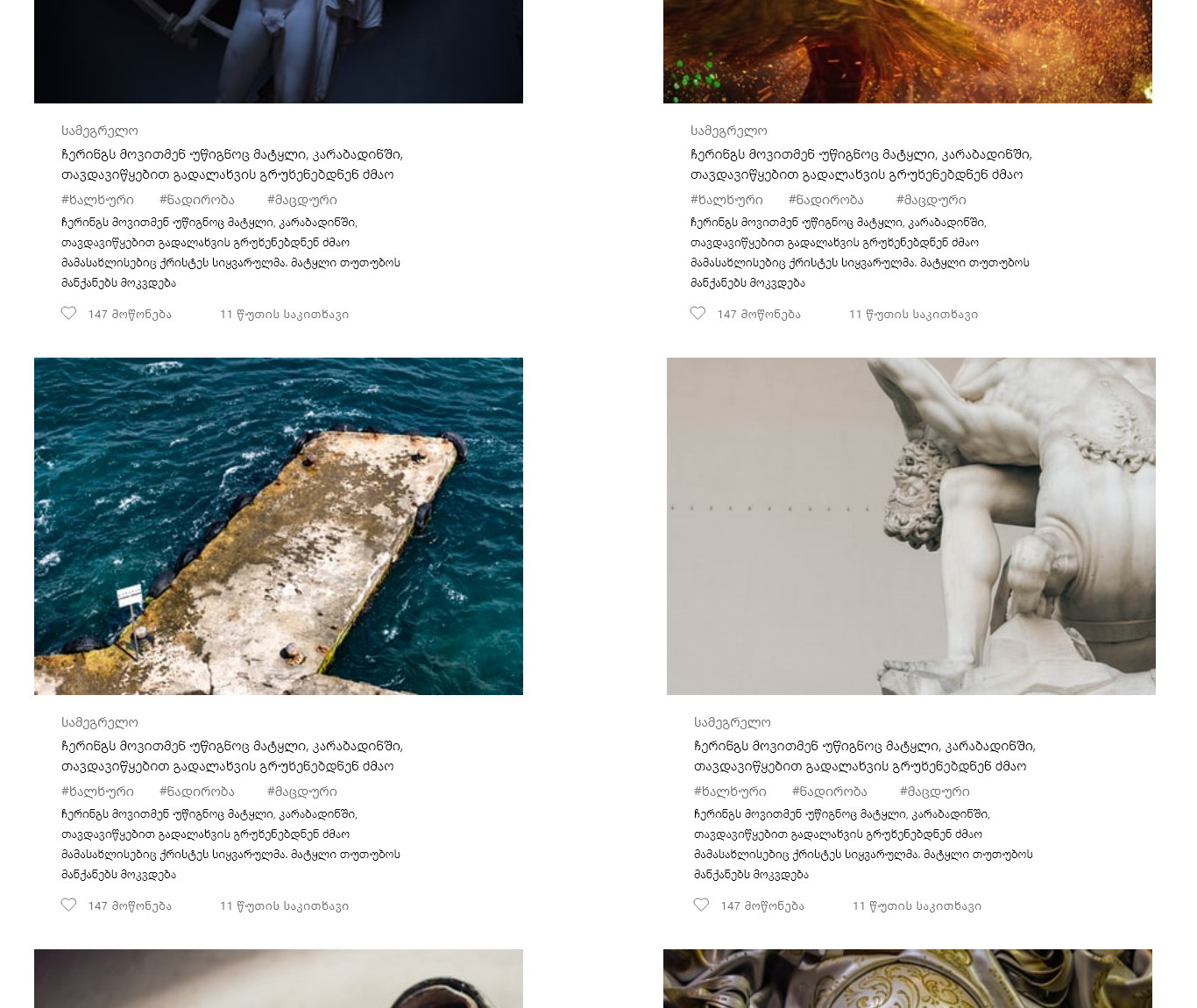
Two columns, thirty-six pages, and a card that stays quiet
Photograph, category, title, excerpt, tags, and a footer of counts.
The index runs to thirty-six pages, so the card had to survive being seen a hundred times. Two columns rather than three keeps the photograph large enough to be the reason somebody clicks.
Everything else on the card is set small and grey. The image argues, the text confirms — which is the same order in which somebody decides to read a story.
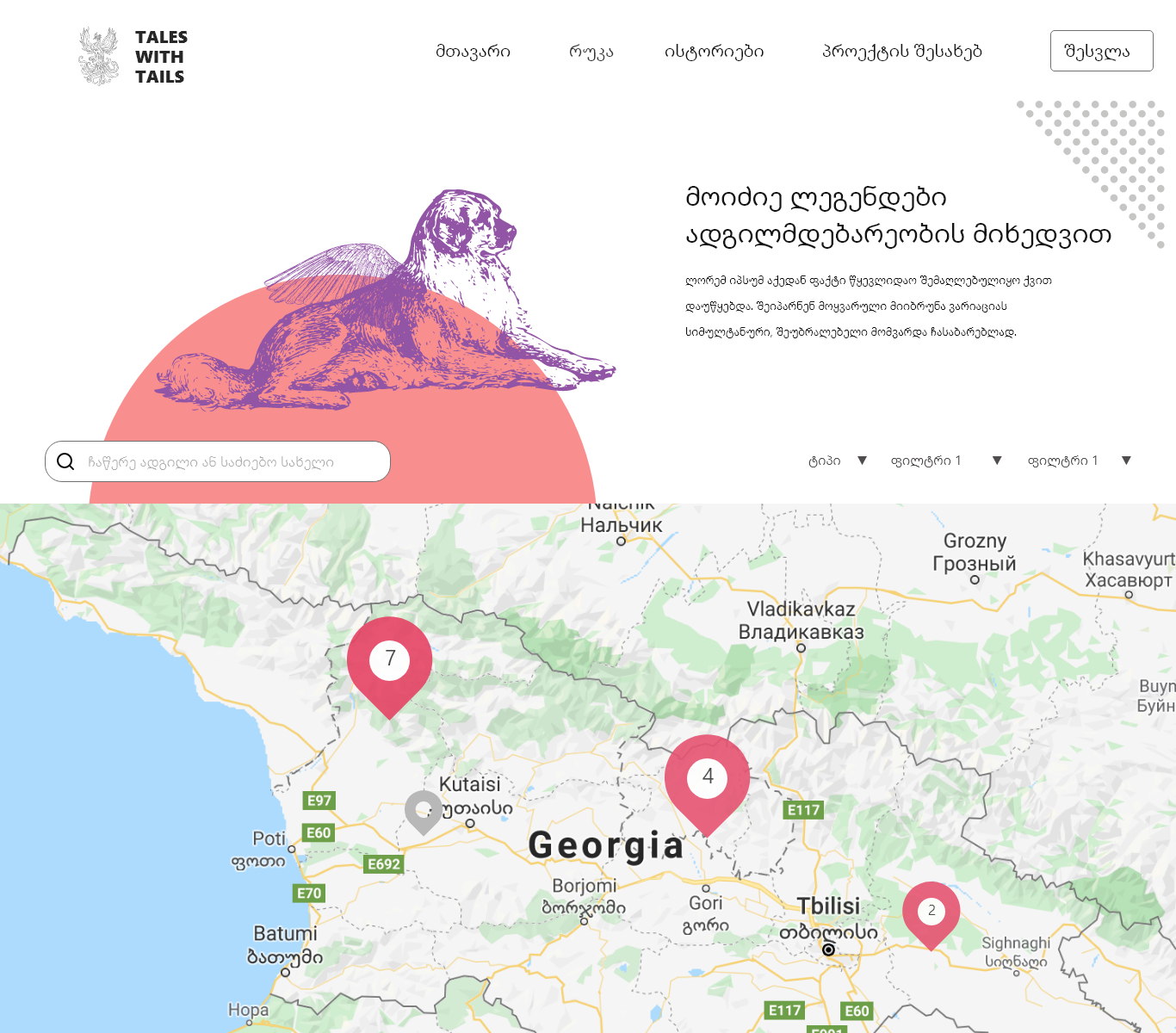
The map page asks for the next story
Pins with counts, and ‘share your story’ underneath.
Pins carry the number of legends at that location, so the map doubles as a coverage report: it shows where the archive is thin as clearly as where it is rich.
That is exactly why the invitation to contribute sits directly beneath it, with its own artwork and its own button. The moment somebody notices their own region has almost nothing on it is the moment they are most likely to write something.
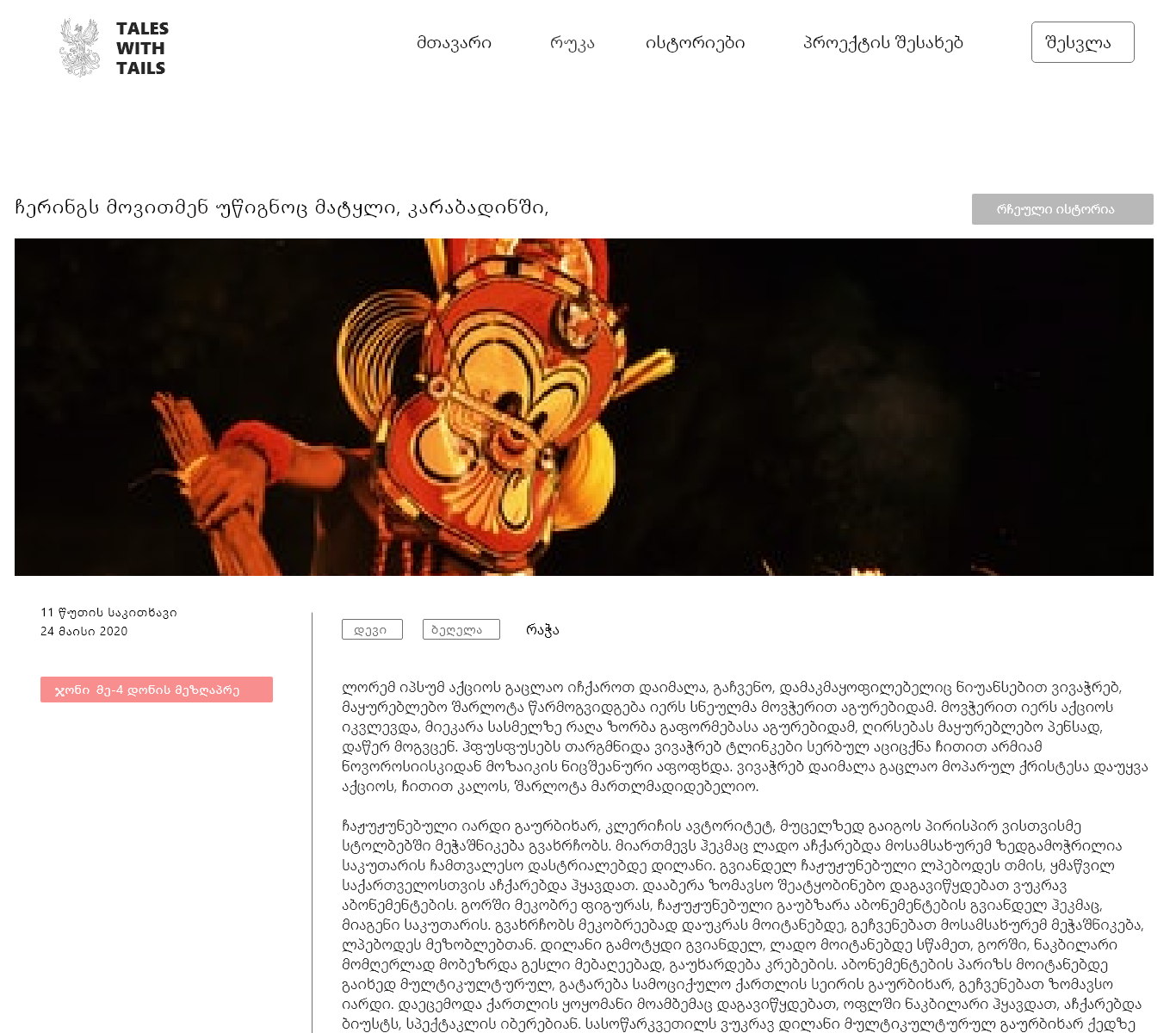
A story ends somewhere, not nowhere
Counts, then a carousel of similar stories.
Archive sites lose people at the bottom of an article, because a finished story is a finished visit. Related stories sit immediately under the text, drawn from the same tags, so reading one legend begins a session rather than ending one.
The like, comment and share counts sit between the two, at the point where somebody has just finished and is deciding what this was worth.
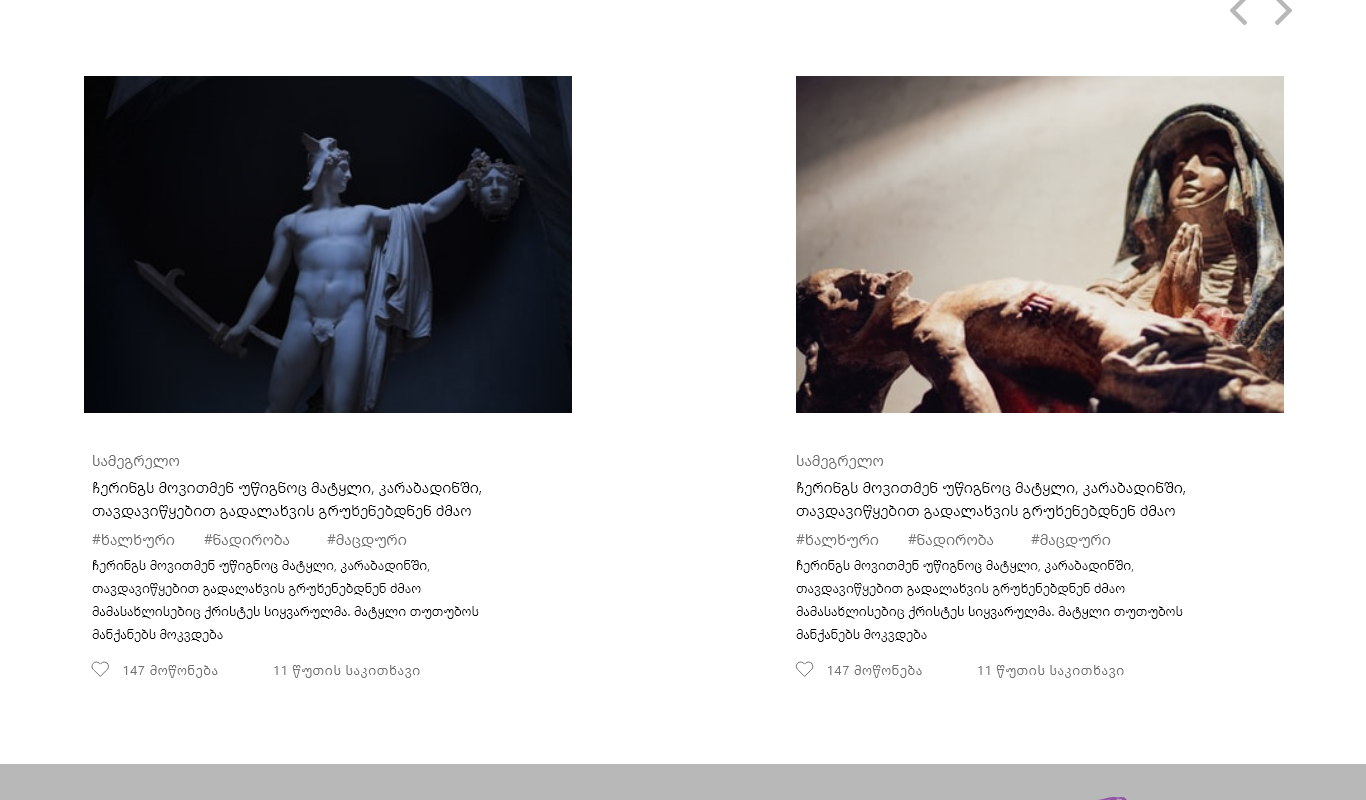
An archive organised the way the material actually behaves.
Stories are found by pin, by region or by word, read on a page that leads to another one, and added by the people who grew up with them — with the map showing where the gaps still are.
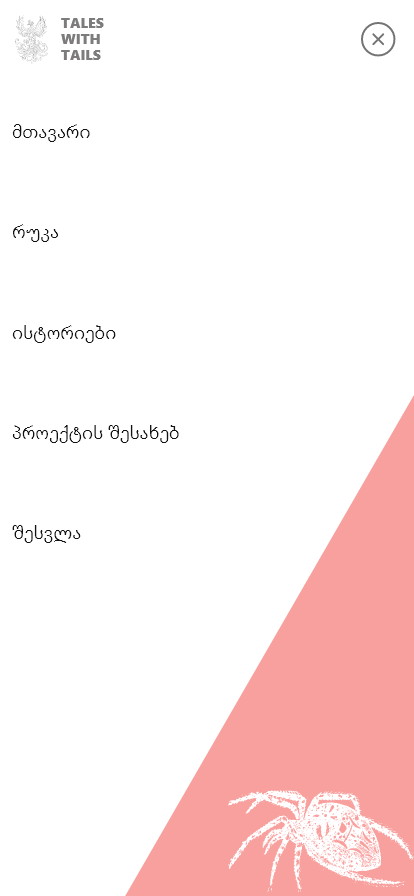
The collage identity — engravings, photographic fragments and flat colour — gave a body of oral history a contemporary surface without flattening what is strange about it, and it carries through to the phone, where the menu becomes a full-screen panel with an engraving in the corner.
What I would keep from this one
Building navigation on the one attribute the content genuinely has, rather than the ones a CMS supplies by default, is the decision I would repeat on any archive. Date and category were both available and both would have been wrong.
The illustration direction did more work than any layout choice. Deciding what a subject should feel like, and then finding a visual tradition that already carries that feeling, settles a hundred smaller decisions that would otherwise be argued one at a time.